- Home
- Fusion
Nuclear Fusion
The Sun's Energy In A Bottle!
Nuclear fusion holds the key to providing us with a huge virtually unlimited power supply. Yet it has the unfortunate association of “always being twenty to thirty years away”. Right from when it was first being explored in the 1950s to the present day. So where is it now?
Why would you want something like nuclear fusion energy anyway?
I remember hearing a story about Apple seeking to develop a clean power source for one of its proposed server centres. These require huge energy inputs. Using currently available solar panels, Apple would have had to build an array covering several square miles of land!
Their desire serves to illustrate a couple of points. One, facilities like computer server centres need massive power volumes. Gargantuan consumption. Second, it reveals limitations in Western scientific thought - linear approaches from basic principles without seeing the complex interactions that nature all around us uses to supply its needs.
Yet a supply from nuclear fusion could provide massive amounts of energy from a very small footprint. With the E=mc2 formula revealing the possibilities of it, and our already understood knowledge of the scale of difference between energy production from nuclear fission shown in the atomic bomb to that available from fusion in the H-bomb.
Nuclear fusion energy is alluring!
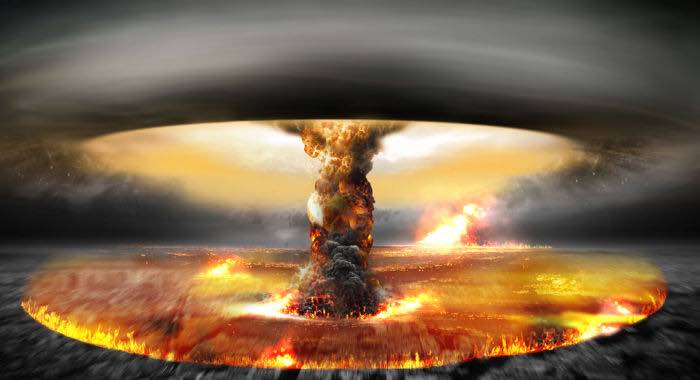
We have already shown we can unleash this awesome power.
Its fuel, from simple hydrogen to slightly more complex atoms, is plentiful on the earth.
Then there is the difference in energy production coming from the slightly bigger mass change in fusion reactions compared with fission ones. The mass times the speed of light squared formula reveals the reason our sun and others stars produce such prodigious heat.
Nature's Illustration
But how exactly do they achieve it?
With their humungous mass, gravitational forces squeeze atoms together. Compression heat from all this increases to a critical point where single atoms, now nuclei and electrons in the form of the fourth state of matter, plasmas, begin to interact with each other, combining or fusing to produce new atomic nuclei.
Involved minute atomic weight changes result in huge energy production, creating more heat and further reactions.
Plasmas And Nuclear Fusion
It was the emerging science of plasmas with associated nuclear fusion research that stirred me as a young teenager.
Again, at that stage, fusion energy production looked just that twenty to thirty years away. It was new, exciting and smacked of the ultimate solution idea.
I was hooked, really keen to head down that path. It looked ideal. A lifetime of stimulating research with many like-minded people.
Just a couple of issues.
It required massive investment with a huge team of the best minds to crack it. Seemingly only the super powers could be in a position to fund such initiatives. I would have to leave my own country to pursue it.
Then there was the military angle. Funding, interest and initiatives were tied up with Cold War planning for ultimate annihilation. MAD or mutually assured destruction. I did not relish participating in that game.
A Distraction...

Then came an open day at the local medical school, something I had never even seriously considered before.
It promised a chance to remain in my own country, to keep my interests and options more open, and it did not come with a military tag. Unless I wanted that.
For years I followed that stream.
Yet those initial stirrings of cutting edge pure science were still there. Just waiting to be reawakened.
Experimenting with simple lasers, then later using them in my work brought all these old interests to the fore.
Just like with Apple’s challenge for concentrated power sources, concerns about climate change, and considerations for alternative power supply, nuclear fusion seemed the Holy Grail.
A Change Of Focus...
I began chasing up nuclear fusion history up until now, checking out possibilities, learning all the terms and latest developments.
It seemed the best alternative out there. In fact I wrote a book extolling its seductive benefits initially posted as a downloadable electronic book. Then a Kindle version of it. Why wouldn’t you want this? An how could you create a viable fusion reactor?
More time exploring energy provision, our world and possibilities have changed my rose tinted glasses about fusion as the ultimate way forward. Yes it is an energy dense solution. Yes it can provide both incredibly massive power sources down to more localised ideas - more on that below. But is it our best source?
That I am continuing to debate in my own mind.
Fusion's Complex Allure
As I have mentioned it still remains, energy-density wise, the best supply possibility. A bit like how lithium ion batteries at present are the lightest energy storage solution we have. In spite of their problems with overheating and the risk of fire.
Fuel for nuclear fusion is abundant. Unlike our fossil fuel sources.
Also it is possible to use it for propulsion of all sorts. We have not yet got the fusion reactor pictured in the DMC Delorean car in “Back To The Future”.
The film’s timeline was a bit hopeful. Similar to our expectations in harnessing nuclear fusion energy for community power stations.
The Essence
Why haven’t we done it yet?
In our ultimate models the sun and other stars with their huge bulk create astoundingly high gravitational fields. This compresses the matter they are made of. Heating occurs spontaneously. Interaction possibilities increase with the created close confinement.
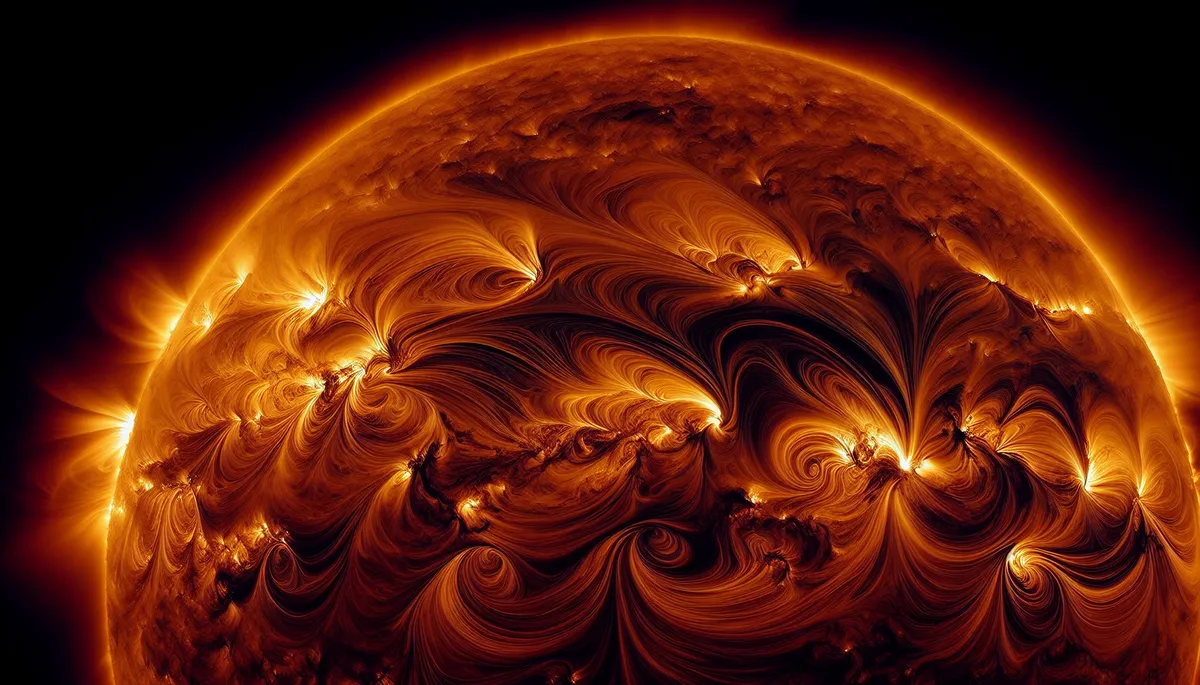
At that level the temperatures, which equate to energy, although huge do not need to be super high in order to produce fusion changes.
Our Limitations
There is no way on earth we could precisely replicate that effect. For a start the earth itself is so much smaller than the sun.
If essential mass cannot be achieved, we need to work out other ways to compress the fuel source, or raise the energy levels, or temperatures, to much higher levels.
There are no materials on earth that can hold such heat. Nor could we contain even lesser sun-like temperatures.
How could we do it?
Fuel at these energies tends to lose its electrons from its atomic structure. Free flowing plasmas of charged atomic nuclei along with their shed electron clouds come into existence.
With that comes the fluid, explosive and complex-to-predict changes we recognise in our sun with its solar storms and huge ejected plasma plumes.
Avenues Of Hope
Managing these complexities requires either somehow confining the plasmas, or shooting different plasmas at each other, or somehow working with these instabilities to create nuclear fusion. Such ideas encompass most of the current projects out there.
Beyond that are later developed alternative proposals based on our understanding of subatomic particles that have their own attractive properties.
Then, once fusion energy has been created, there needs to be a means to harness it to create usable power.
Targeting Beams Of Energy
With the background of the hydrogen bomb, shooting atoms toward each other seems a logical pathway. As long as we are not seeking to launch large amounts of matter towards one point at the same time which would result in a bomb’s sudden destructive outcome.
Repeatedly firing small elements at a target point should create a continuous flow of energy production.
Particle accelerators shooting sequences of atoms to that target point should work. Or bombarding a central target of atomic nuclei with energy such as from lasers is also a possibility. The alluring draw of those mysterious coordinated intense light energy beams seems a sure bet. Other possibilities could employ high energy particles, ion or X-ray beams.

This is not the realm of the large Swiss and
French border underground Hadron Collider that concerned many people in
recent years, producing fiction like Dan Brown’s “Angels and Demons”
book followed by the successful film with Tom Hanks. The experimental
reason for this huge particle accelerator was to uncover the most basic
subatomic particle structure of matter. More on how our understanding
of these even smaller units has been driving other nuclear fusion
initiatives is explored below.
But ones that are seeking to produce an energy source range from huge military backed constructions such as the US National Ignition Campaign to linked projects like that in Europe known as HiPER.
Newer ones are looking at heavier nuclei than the more commonly explored ones of hydrogen with its isotopes of deuterium and tritium. There is an incorporated private company with its intriguing star power systems name and a much larger, multi-player defence force pathway seeking to use huge linear accelerators.
Confinement Ideas
From the other perspective, somehow confining plasmas also seems attractive. It seems much more controllable and compact. By creating magnetic fields in some way the charged plasma atoms can be confined within an area away from container walls that would otherwise vaporise.
Initial USA experiments with the idea produced stellarators, with their unusual shapes catering for the tortuous twisting of the fluid high energy plasma ion mass. Their name, based on “stellar”, conjures up star-based energy and allure.
Yet a Russian idea of a much more regular container - a doughnut shape - seemed to produce tantalising results in a shorter time frame.
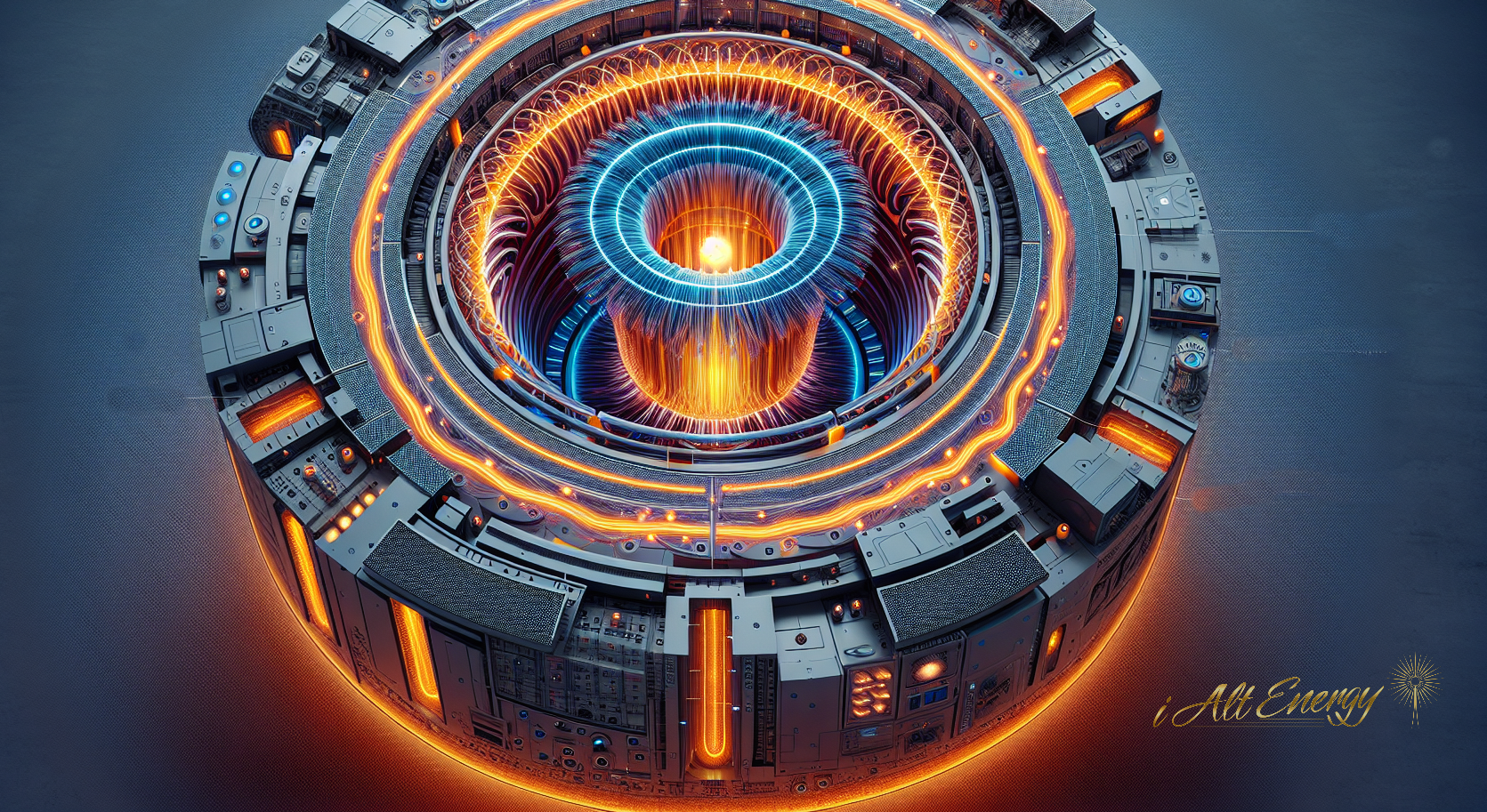
With scientific collaboration, in “Atoms For Peace” initiatives, world attention focused on this method almost exclusively. Currently the globe’s largest and most expensive multi-national project follows this design. As does a British-based one using its own path but which nevertheless derives experimental information helpful in developing the multinational behemoth.
Over time other variations emerged such as more spherical forms of the doughnut.
Then there are other experiments that utilise magnetic field confinement produced by electric currents. Some like the Polywell one have been going for many years with multiple generations of its energy production structure.
Another which arose from ideas within the Polywell device and added elements of accelerators arose much later, but again shows promise. One of the most heavily backed initiatives in this area is the until recently very secretive Tri-Alpha project. Yet the most recent addition in this packed field is aeronautical researcher’s Lockheed Martin’s Skunk Works approach.
Increasing Performance
Within these various structures it is possible to increase energies and hence temperatures by firing high energy beams of various sorts into the writhing plasma mass. This increases the excitation of the various ions, thereby increasing the number of collisions or interactions, leading ideally to nuclear fusion, producing energy.
The complex nature of the resulting almost uncontrollable soup has lead other initiatives back to reconsidering the stellarator. That and variations of it from purely spherical in design to another complex variation on that.
Electrical Discharges
One way to do this is by repeatedly creating huge electric fields that could briefly contain or compress high energy plasmas long enough to produce nuclear fusion. One of the earliest research projects based in the UK pursued this avenue.
Others followed including massively militarily funded US initiatives such as the New Mexico based Sandia labs. With their ongoing federal funding, concerns to maintain nuclear arsenals and maintain a global edge on possible new technologies, you would think they should be at the lead in their results.
Yet maybe this multi-goal directed mission diffuses energy.
Funding Requirements
Whatever the reason a number of smaller projects, many of which had some military or space-based funding, have accelerated their programs.
As a consequence of losing federal funding they have had to seek private money. Over time many prominent entrepreneurs and business leaders have plumped for backing various ventures they feel have the most promise.
Programs arising from such sources include Washington state based Helion and on to the well respected Canadian fusion initiative which has attracted the backing of the hugely influential Amazon company founder.
Beyond Confinement
Outside of these major branches of imposed plasma confinement are a number of others, arising from observations of nature and in experiments on the character of plasmas.
Lightning, which its huge energy release, creates its own plasma in the air. At times forms of lightning even produce their own isolated balls of energy.
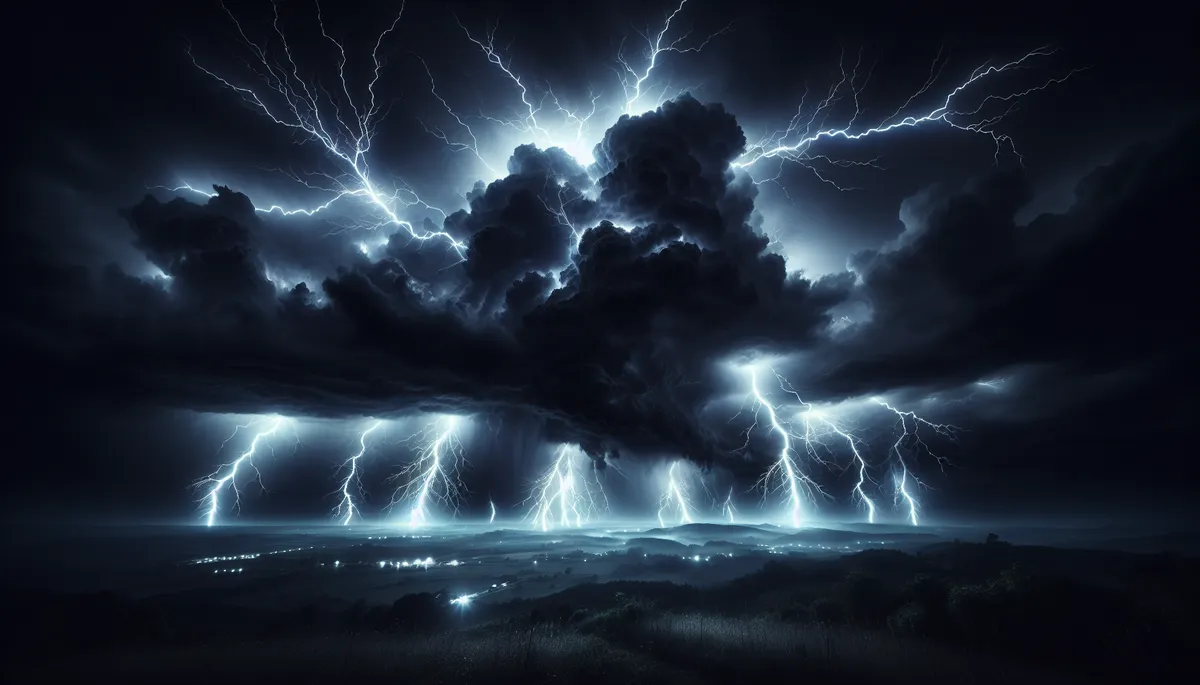
Several different approaches have been researching ways to utilise this unique behaviour. Whether it’s a combined approach such as that of Electron Power or the more free form seen on the Prometheus-named project.
Also, playing on the convoluted, writhing patterns plasma produces, another approach has been followed by quite a number of countries over many years. Creating high energy fields within plasmas their purpose has been to produce a very confined compression that could itself initiate fusion.
One prominent project showing great promise within this approach is based in New Jersey. It has collaborated with the many other research stations around the world pursuing this stream, including even Iran’s fusion studies.
Fuel Variations
Like a few other projects mentioned above their goal is to use a different fuel from just hydrogen and its isotopes. It requires somewhat higher energies to do so.
But it has a number of advantages such as using larger nuclear particle size targets for interactions as well as clean, non-radioactive by-products. There is even a social network promoting this.
Pure hydrogen-based fuels generate radioactive decay products. Although much shorter in half life compared to nuclear fission reaction ones, they nevertheless require careful management of the wastes.
Yet Another Way
Almost out of left field there has been yet another arm of research into nuclear fusion power generation.
I am not talking about cold fusion which seems to have been an aberration based on certain observations that have been difficult to reproduce. Yet in spite of this consumes vast amounts of promotion, enquiry and speculation.
What I am alluding to is a more basic physics principle. That of what once was considered to be the most basic particles of matter actually being made up of smaller elements. Subatomic particles, that make up neutrons and protons, have emerged as yet another possibility in the pursuit of nuclear fusion power.
The most well known of these initiatives is based in Australia doggedly pursued by an innovative refugee from the maelstrom of World War II. Illustrating such an avenue is not based on delusions of a single individual a similar project in Japan is underway, quite seperate from that country’s huge investment in the multinational ITER collaboration.
With so many variations in size, history, location and investment, news of nuclear fusion is constantly changing. Hopefully the twenty to thirty years away branding will in the near future change to now and which one!
New Developments On These Topics Or Something Entirely New?
Are there new developments that you know of in these areas I have covered. Or is there something I have missed completely? Please feel free to share it!
What Other Visitors Have Said
Click below to see contributions from other visitors to this page...
Where Do The Hydrogen Nuclei Go? 
A question posed: What will happen to the hydrogen particles after shooting them at high speed?
Answer:
With nuclear fusion energy production …
Heavy Ion Fusion the only Solution to the Energy and Environmental Problem
The World Energy Need and a Real Solution
Energy is the lifeblood of modern society. Energy is the slave of modern man but somehow energy has also …
Crowd Funding Focus Fusion
LPP's Focus Fusion project is crowd funding focus fusion seeking $200K for beryllium electrodes for their special reactor core.
They think they're …
- Home
- Fusion

New! Comments
Have your say about what you just read! Leave me a comment in the box below.